What Is a Peptide Stack? A No-BS Guide for Beginners
What is a peptide stack? Plain-English guide to how stacking works, popular combos like the Wolverine stack, and how to build your own.
If you've spent any time in peptide forums, you've seen people throw the word "stack" around like everyone's supposed to already know what it means. Someone posts their "Wolverine stack," forty people argue about doses in the comments, and you're sitting there wondering what you actually just read.
So let's clear it up. No fluff, no sales pitch dressed up as a guide. Just what a stack is, how it works, and what people are actually running.
What does "peptide stack" actually mean?
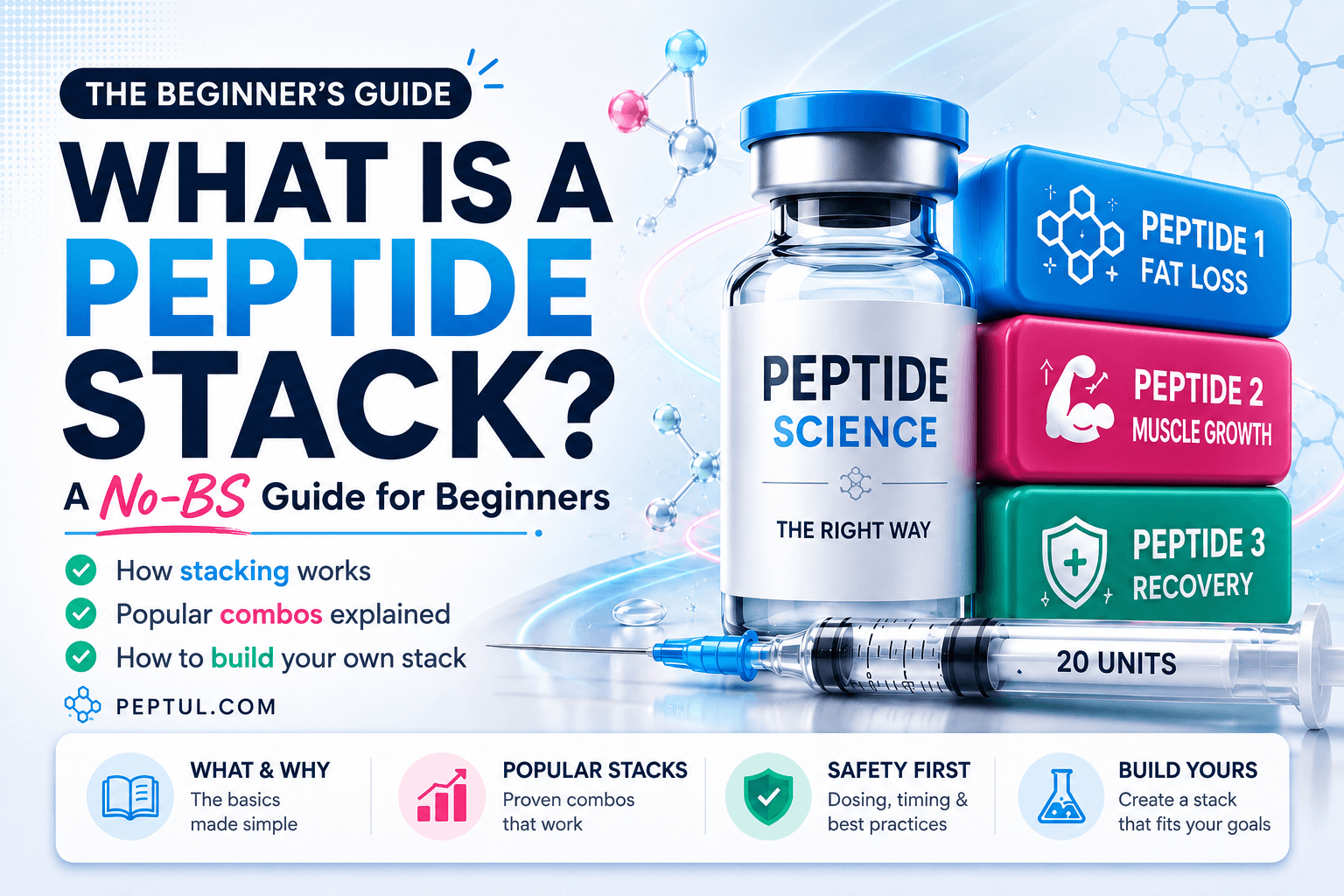
A peptide stack is when you run two or more peptides at the same time on purpose, because the combo does something that running one alone won't.
That's the whole definition. "Stack" is just borrowed gym slang for stacking supplements or compounds together. When someone says they're "stacking BPC-157 and TB-500," they mean they're using both in the same protocol and timing them to work together.
The key word is on purpose. Taking two random peptides because you had them lying around isn't a stack. It's just two peptides and a guess.
How do peptide stacks work?
Different peptides do different jobs. Some target one pathway hard, some work system-wide, some are great at one thing and useless at another. The idea behind stacking is you pair peptides that cover each other's blind spots.
The classic example: BPC-157 is known for localized healing - gut, tendons, the specific area you're trying to fix. TB-500 (or its fragment, TB-4) works more system-wide on recovery and mobility. Run them together and people report faster recovery than either one solo, because you're hitting the problem from two angles instead of one.
That's the logic. Two complementary tools, not two of the same hammer. A good stack has peptides that add to each other. A bad one just doubles up on the same effect and wastes your money.
Can peptides be stacked? Is it even a thing people do?
Yeah, constantly. Stacking is probably the most common way people run peptides once they're past their first single-compound cycle.
The real question was never "can you." It's "which ones go together, and how do you time them." That's where most beginners trip up - not on whether stacking is allowed, but on building a stack that actually makes sense.
Do peptide stacks actually work?
Honest answer: it depends, and don't let anyone tell you different.
A lot of what you read online is anecdotal. Someone ran a stack, felt great, and posted about it. That's real feedback, but it's one person, no control group, and a strong placebo possibility. Some peptide combos have decent research behind the individual compounds; almost none have formal studies on the stack specifically.
So here's the realistic take: well-chosen stacks built on complementary peptides tend to give people results that line up with what each peptide does on its own. What they're not is magic. If a stack promises you'll recomp 20 pounds in a month, that's a vendor talking, not a researcher.
Manage your expectations, track your own results, and treat forum hype as a starting point for research - not a prescription.
Popular peptide stacks people actually run
These are the combos you'll see come up over and over. Quick rundown so you know the names when they show up:
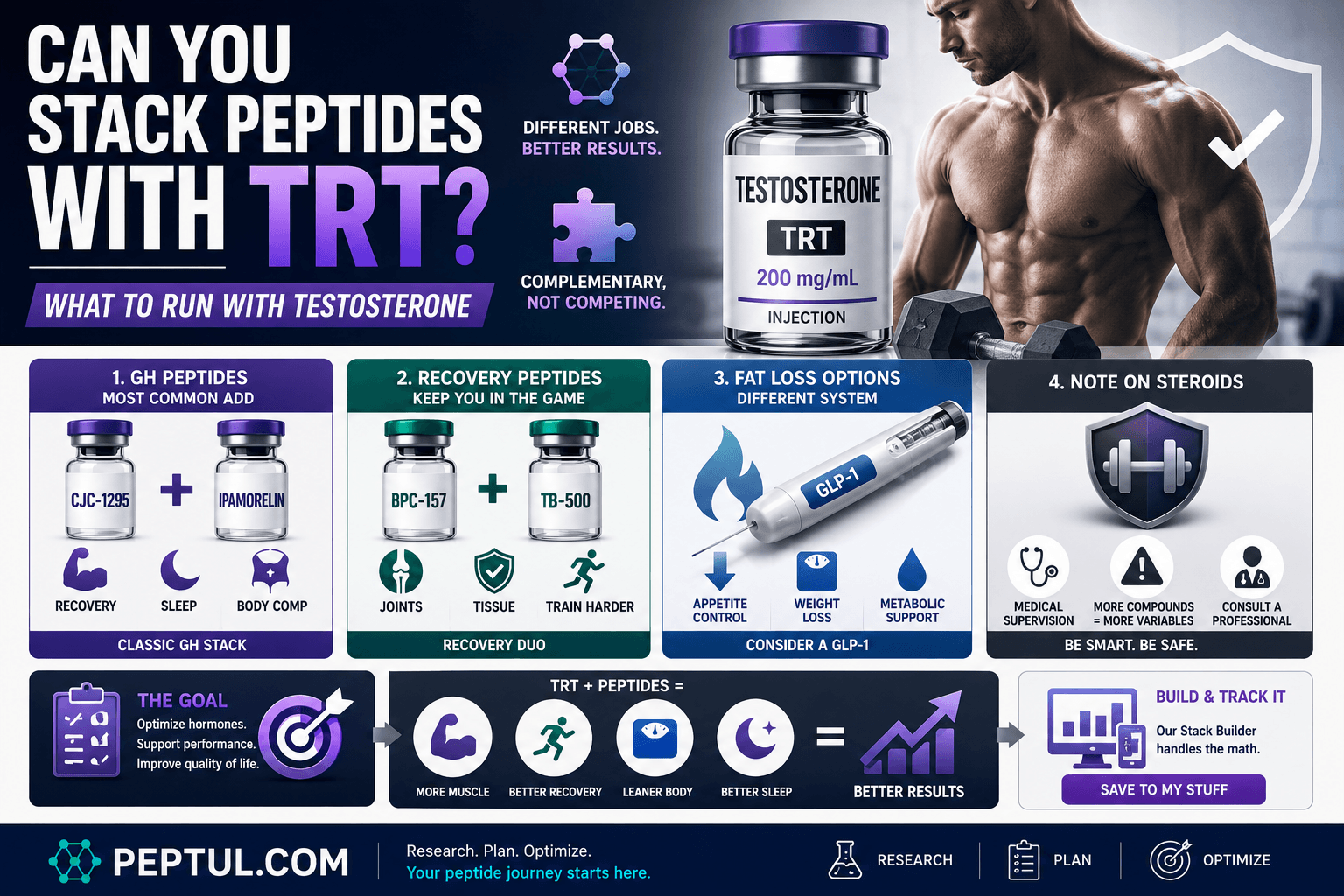
The Wolverine Stack - BPC-157 + TB-500. The go-to recovery and healing combo. Named after the obvious reason.
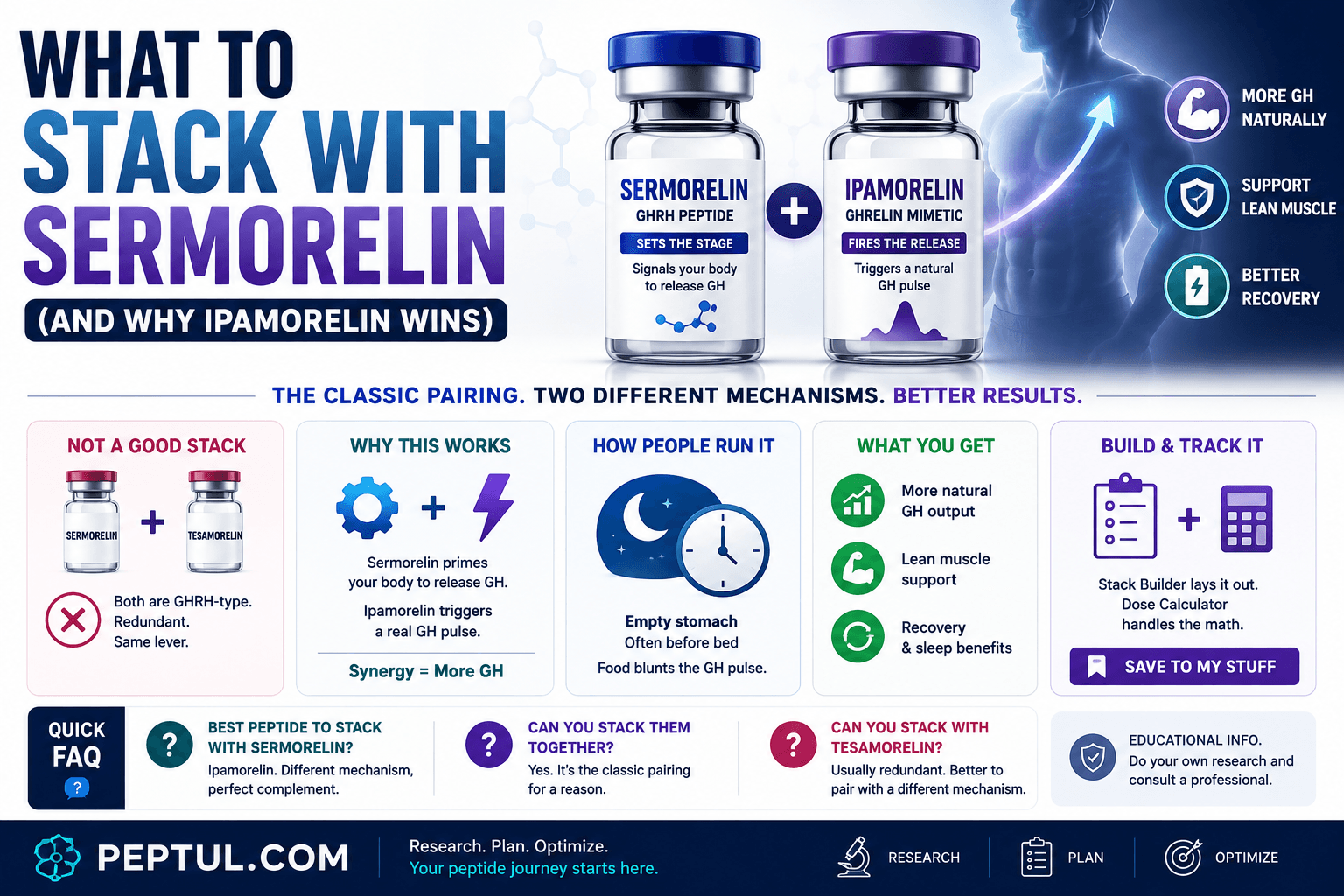
CJC-1295 + Ipamorelin - the classic growth hormone pairing. Probably the most-run beginner stack on the planet. One kicks off a GH pulse, the other extends it.
The GLOW Stack - GHK-Cu + BPC-157 + TB-500. The skin, hair, and recovery combo people run for the cosmetic side.
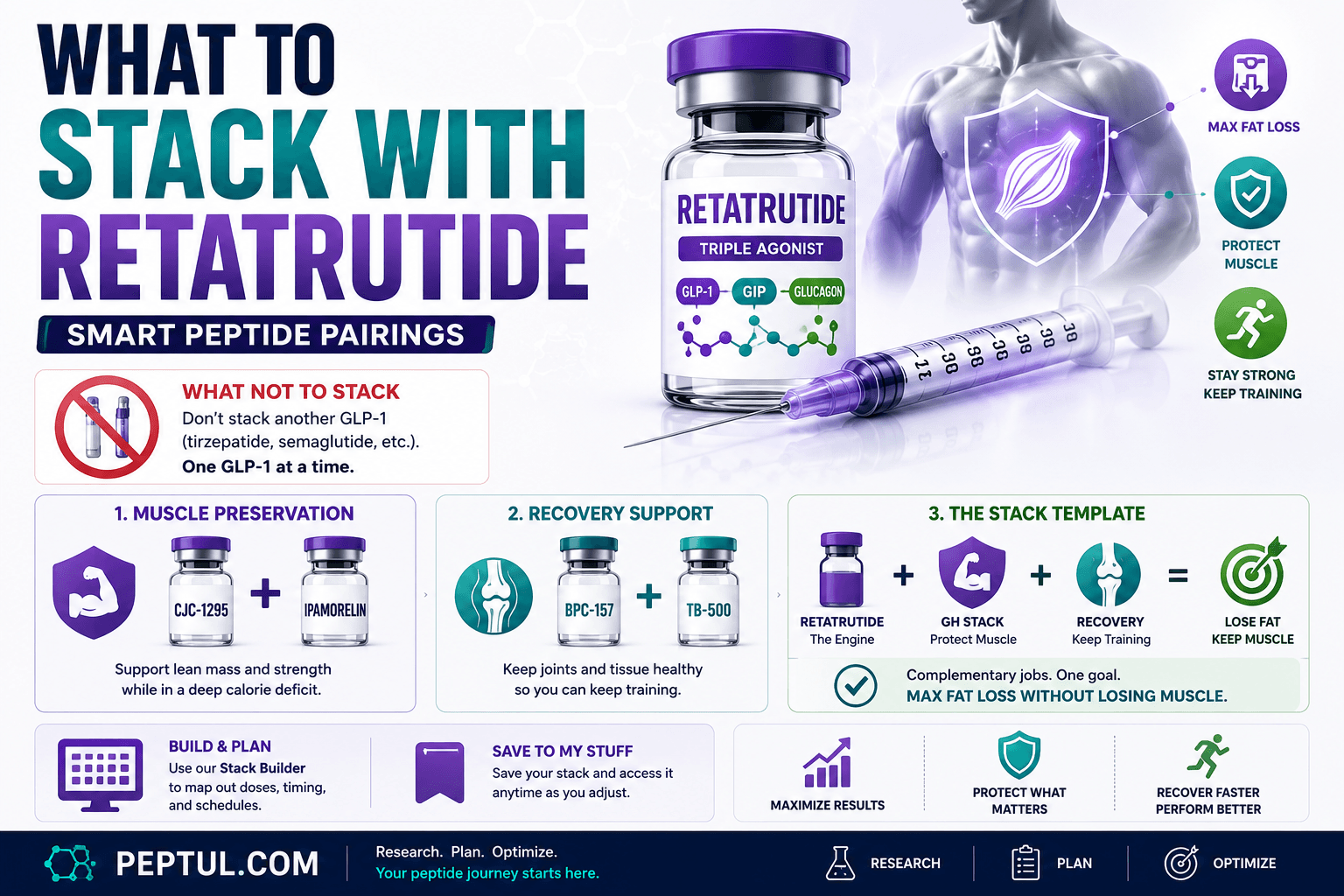
GLP-1 combos - things people stack around tirzepatide or retatrutide for weight management. This one's evolving fast.
Each of these deserves its own deep dive, and we've got those. This post is just the map.
What separates a good stack from a random pile of vials
A few rules people learn the hard way:
Complementary, not redundant. Two peptides that do the same thing aren't a stack, they're a refund waiting to happen. Pair things that cover different jobs.
Timing matters. Some peptides want an empty stomach, some are fasted-morning only, some you take pre-bed. Throwing everything in at once and hoping isn't a protocol.
Don't start with five things. If you stack four peptides on day one and something feels off, you have no idea which one did it. Build up. Add one variable at a time so you can actually read your own results.
Doses aren't interchangeable. "Stack" doesn't mean "same dose for everything." Each peptide has its own range, and mixing two in one syringe changes the math.
That last one is where most people's notes turn into chaos.
The annoying part nobody warns you about
Here's what actually happens. You read three forum threads, screenshot a couple of comments, scribble doses on a sticky note, and two weeks later you're trying to remember if it was 250mcg or 500mcg and which vial you reconstituted with how much bac water.
Then you want to tweak the stack, and you're rebuilding the whole thing from memory.
That's the exact mess our stack builder was made for. You pick your peptides, it shows you what pairs sensibly, handles the dosing math, and lays the whole protocol out in one place instead of across six screenshots.
And when you've got a stack you like - save it to My Stuff so it's there next time. It's free, takes one click, and means you never have to reverse-engineer your own protocol again. No more sticky notes. Build it once, pull it up whenever, tweak it when you want.
You'll build a stack eventually anyway. Might as well have it saved instead of scattered.
Quick FAQ
Are peptide stacks safe? Stacking isn't automatically riskier than running peptides solo, but more compounds means more variables. Research each peptide individually, start conservative, and talk to a healthcare professional - especially if you're on other medications.
Can you put two peptides in one syringe? Sometimes, depending on the peptides and how they're reconstituted. It's not always a yes, and the dosing math changes when you combine them. We cover this in its own guide.
What's a good first stack for beginners? Most people start with a two-peptide combo where both compounds are well understood - CJC-1295 + Ipamorelin is the usual entry point. Two is plenty to learn on.
How many peptides can you stack at once? There's no hard number, but more isn't better. Each one you add makes it harder to tell what's working. Most solid stacks are two or three compounds, not seven.
This is educational info for research purposes, not medical advice. Peptides affect everyone differently - do your own research and consult a professional before starting anything.
Tags
For educational and research purposes only. Not medical advice. Always consult a qualified healthcare provider before using any research compound.