Are Peptide Stacks Safe? What Beginners Need to Know
Are peptide stacks safe? What stacking actually changes about risk, how to stack conservatively, and the mistakes beginners make.
Are Peptide Stacks Safe? What Beginners Need to Know
Before you run two or three peptides together, it is fair to ask: is stacking actually safe, or are you multiplying your risk? Here is the honest answer, plus the beginner mistakes that cause most of the problems.
The short answer
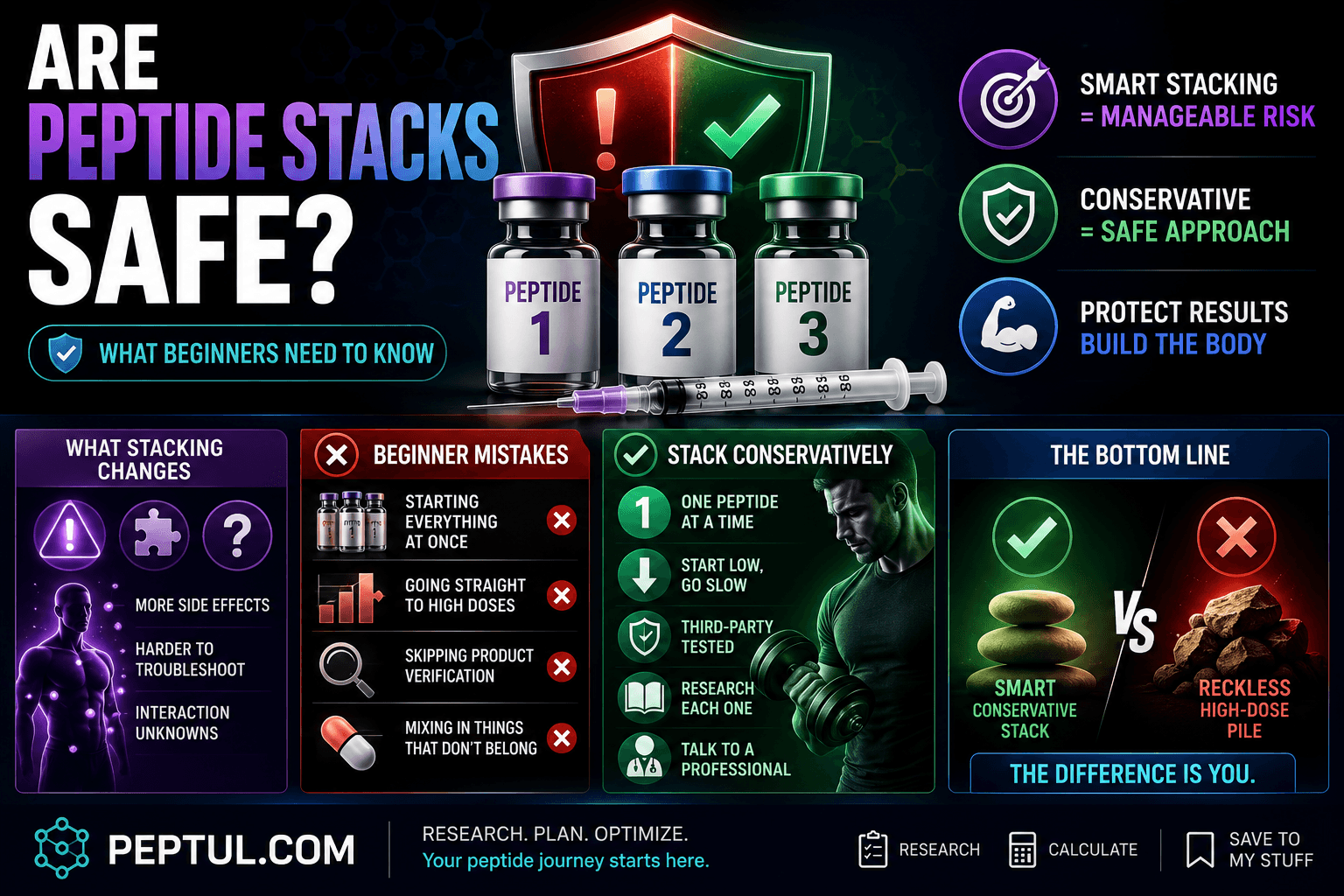
Stacking is not automatically more dangerous than running a single peptide - but it does add variables, and more variables means more ways for things to go sideways or get hard to interpret. The risk is manageable if you are sensible, and reckless if you are not.
What stacking actually changes about risk
Running one peptide, you have one set of effects to watch. Running three, you have:
- More potential side effects to track at once
- Harder troubleshooting - if something feels off, which of the three caused it?
- Interaction unknowns - most peptide combos have little to no formal research on the stack specifically
None of that makes stacking inherently unsafe. It makes it something to approach with a bit of discipline rather than throwing everything in at once.
The beginner mistakes that cause problems
Most stacking trouble comes from a handful of avoidable errors:
Starting everything at once. If you begin four peptides on day one and feel off, you cannot tell which one did it. Add one at a time.
Going straight to high doses. Start conservative. You can always increase; you cannot un-take a dose.
Skipping product verification. A bad or impure product is a bigger safety risk than the stack itself. Use third-party-tested compounds.
Mixing in things that do not belong. Combining peptides with other drugs you do not understand is where real danger lives. For example, anything involving insulin or other prescription medications is not a casual stack addition - that is a talk-to-a-doctor situation, not a forum experiment.
How to stack conservatively
- Add one peptide at a time so you can read your own reaction
- Start at the low end of dose ranges
- Use third-party-tested product (check COAs)
- Research each compound individually before combining
- Talk to a healthcare professional, especially if you take other medications
The bottom line
A well-chosen, conservatively-run stack of complementary peptides is reasonable for most people who do their homework. A pile of compounds started all at once at high doses from an untested vendor is not. The difference is you.
Quick FAQ
Are peptide stacks safe? They are not automatically riskier than single peptides, but they add variables. Conservative dosing, one-at-a-time additions, and tested product keep risk manageable.
Is stacking riskier than one peptide? Somewhat, mainly because troubleshooting is harder and combinations are less studied - not because stacking is inherently dangerous.
What is the biggest safety mistake? Starting several peptides at once at high doses, or using untested product. Both are avoidable.
This is educational info for research purposes, not medical advice. Do your own research and consult a professional, especially if you take other medications.
Tags
For educational and research purposes only. Not medical advice. Always consult a qualified healthcare provider before using any research compound.