Can You Stack Peptides in One Syringe? (The Honest Answer)
Can you stack peptides in one syringe? When it's fine, when it isn't, and how the dosing math changes when you combine peptides.
Can You Stack Peptides in One Syringe? (The Honest Answer)
If you are running a stack, doing three separate injections gets old fast - so people naturally ask whether they can just combine peptides in one syringe. The honest answer is "sometimes," and the details matter.
The short answer
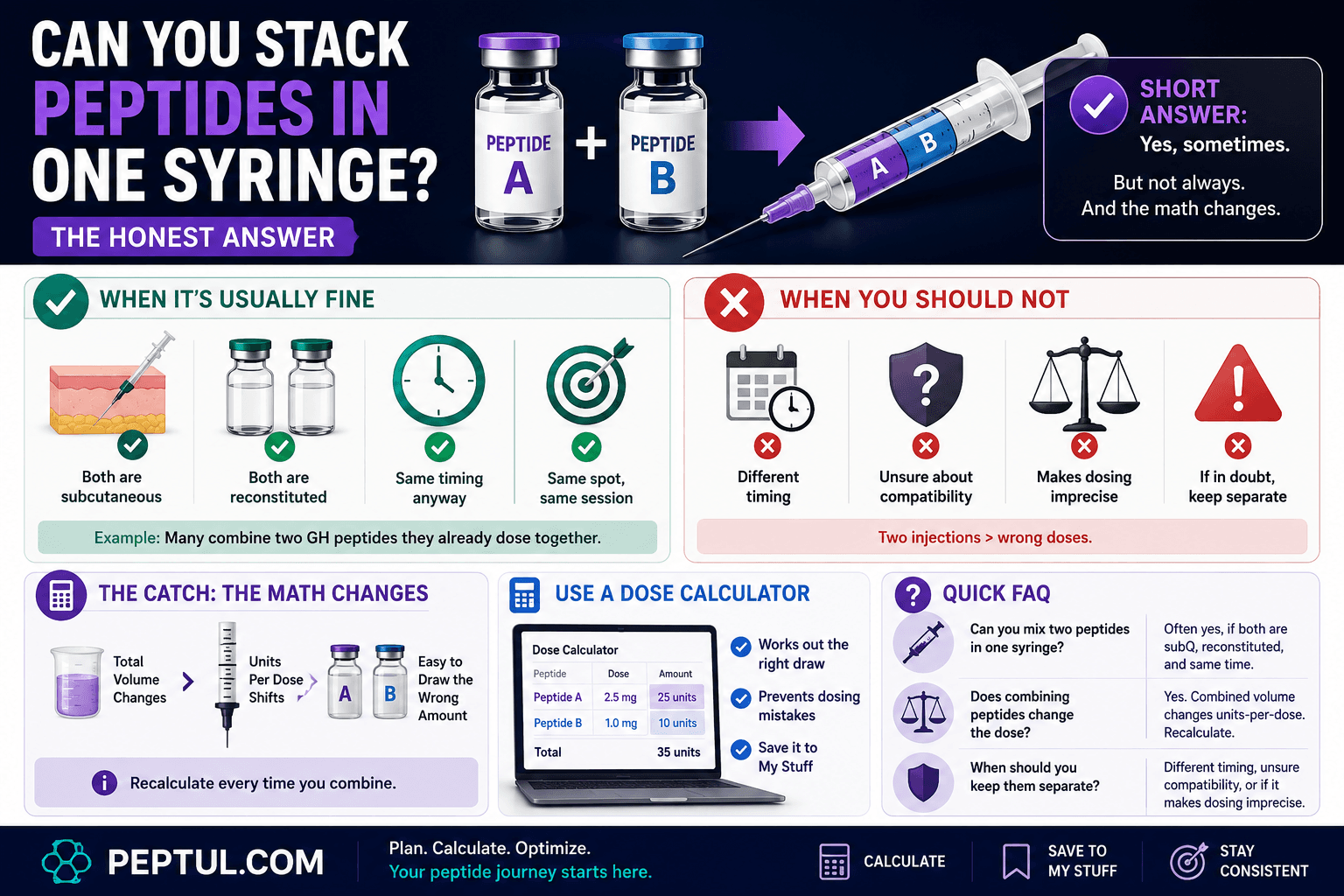
Yes, you can often draw two peptides into one syringe and inject them together - but not always, and combining them changes your dosing math. It is a convenience move, not a free-for-all.
When it is usually fine
Many people combine peptides that:
- Are both subcutaneous and injected in the same spot anyway
- Are reconstituted and ready to draw
- Share the same timing (you would be injecting them at the same time regardless)
A classic example is drawing two GH peptides that you already dose together. If two compounds are going to the same place at the same time, combining the draw is often reasonable.
When you should not
- When the peptides want different timing (combining forces them onto the same schedule, which defeats the purpose)
- When you are unsure about compatibility - some compounds are simply better kept separate
- When it makes your dosing imprecise (see below)
If in doubt, keep them separate. Two injections is a small price for getting the doses right.
The catch everyone misses: the math changes
This is the real reason to be careful. When you combine two peptides in one syringe, the total volume and the units-per-dose shift, and it is easy to end up drawing the wrong amount of one or both. The dosing math is no longer "one vial, one dose" - it is a combined calculation.
That is exactly where mistakes happen, and exactly what our dose calculator is for - it works out the right draw even when you are combining compounds, so you are not eyeballing it. Set it once and save it to My Stuff.
Quick FAQ
Can you mix two peptides in one syringe? Often yes, if they are both subQ, both reconstituted, and dosed at the same time - but not in every case.
Does combining peptides change the dose? Yes - the combined volume changes your units-per-dose. Recalculate so you draw the right amount of each.
When should you keep them separate? When they want different timing, when compatibility is uncertain, or when combining makes dosing imprecise.
This is educational info for research purposes, not medical advice. Do your own research and consult a professional before starting anything.
Tags
For educational and research purposes only. Not medical advice. Always consult a qualified healthcare provider before using any research compound.