Retatrutide Dosing & Mixing Guide: Reconstitution to Injection
How to mix and dose retatrutide: reconstitution, starting dose, injection, and timing. The complete retatrutide dosing guide.
Retatrutide Dosing & Mixing Guide: Reconstitution to Injection
Retatrutide adds a step most people are not used to: it comes as a powder you have to mix yourself before you can dose it. That trips up beginners more than the dosing itself. Here is the whole process, mixing through injection.
One important note up front: retatrutide is still investigational - it is not approved, so there is no official dosing. Everything below is commonly cited community and research-context information, not a prescription. Treat it accordingly. For the full legal and availability picture, see Is Retatrutide Available Yet?.
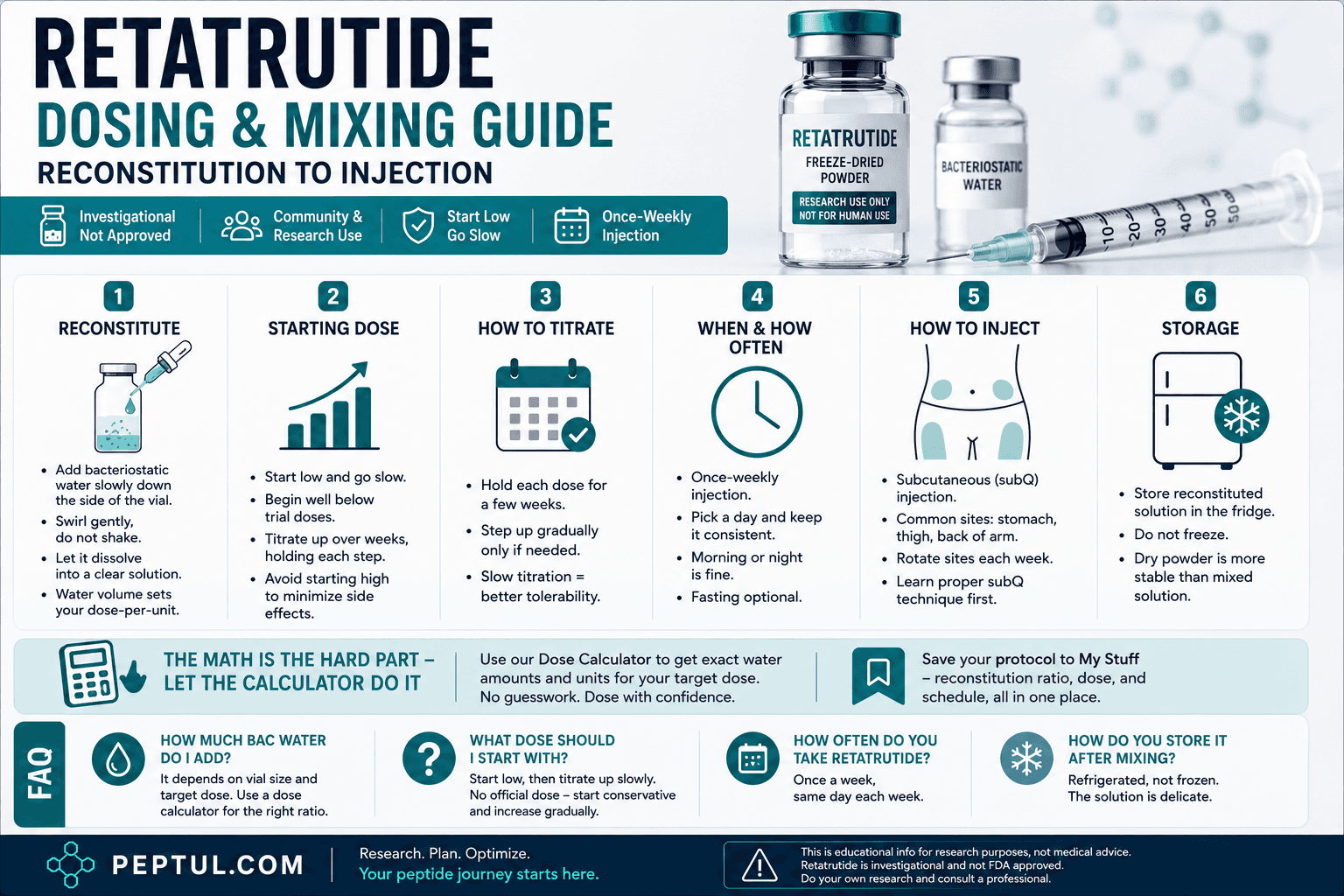
Step 1: Reconstituting retatrutide
Retatrutide ships as a freeze-dried powder. To use it, you add bacteriostatic water - this is reconstitution.
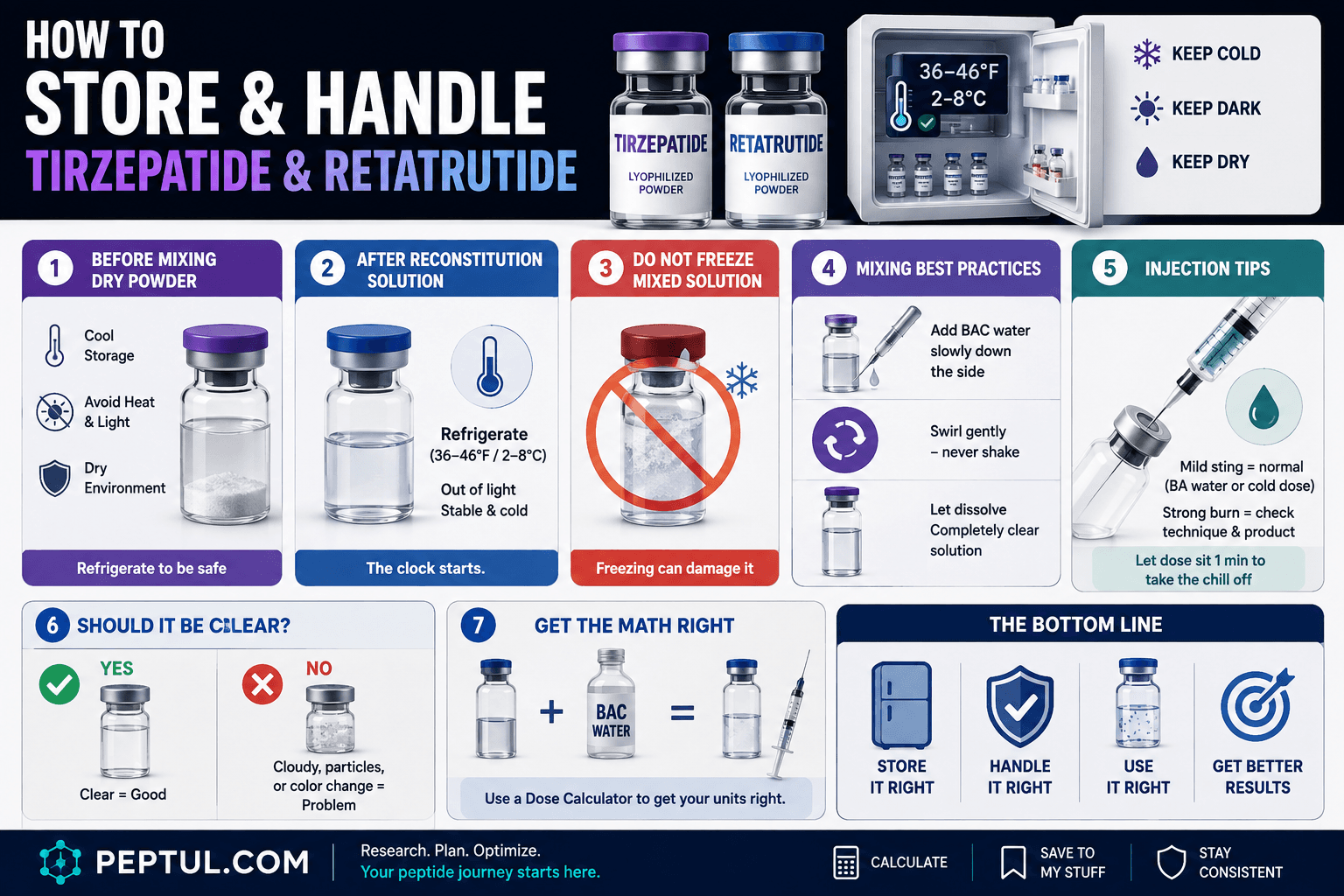
Add the water slowly, letting it run down the inside of the vial rather than blasting the powder directly.
Swirl gently, do not shake. These peptides are delicate; shaking can damage them. Let it dissolve into a clear solution.
How much water you add sets your dose-per-unit. This is the part everyone fumbles. The volume of bac water you choose determines how many units on the syringe equal your target dose. More water means more units per dose (easier to measure small doses); less water means fewer units. This is exactly what a calculator is for.
Step 2: What dose to start with
Because retatrutide is not approved, there is no official starting dose - but the universal community principle is start low and go slow. People typically begin well below trial doses and titrate up over weeks, holding each step to let side effects settle. The trial program used a slow climb for a reason: it keeps the gut side effects manageable.
Do not start high. The fastest way to a miserable week is jumping in at a big dose.
Step 3: How to titrate
Same logic as other GLP-1s: hold a dose for a few weeks, then step up gradually only if needed. Slow titration is the single biggest lever for tolerability.
Step 4: When and how often
Retatrutide is a once-weekly injection. Pick a day, keep it consistent. Morning or night does not matter much - choose what you will remember. Food is not a strict requirement, though some prefer dosing fasted.
Step 5: How to inject
It is a subcutaneous (subQ) shot - short needle into the fat, usually the stomach, thigh, or back of the arm. Rotate sites each week. If injecting is new, learn proper subQ technique before your first shot.
Storage
Once reconstituted, retatrutide generally needs to live in the fridge. The dry powder is more stable, but mixed solution is delicate - keep it cold and do not freeze it.
The math is the hard part - let the calculator do it
The mixing-to-dose math (how much bac water, how many units per dose, tracking your titration) is where people make mistakes. Our dose calculator takes your vial size and target dose and tells you exactly how much water to add and how much to draw. No guesswork, no under- or over-dosing.
Then save your protocol to My Stuff - your reconstitution ratio, dose, and schedule, all in one place for next time. Mix it right once, repeat it exactly.
Quick FAQ
How much bacteriostatic water do I add to retatrutide? It depends on your vial size and target dose - there is no single number. Use a dose calculator to get the ratio that makes your dose easy to measure.
What dose of retatrutide should I start with? Low, then titrate up slowly. There is no official dose since it is not approved - start conservative and increase gradually.
How often do you take retatrutide? Once a week, same day each week.
How do you store it after mixing? Refrigerated, not frozen. The reconstituted solution is delicate.
This is educational info for research purposes, not medical advice. Retatrutide is an investigational compound that is not FDA approved and cannot be legally prescribed or compounded. Do your own research and consult a professional.
Tags
For educational and research purposes only. Not medical advice. Always consult a qualified healthcare provider before using any research compound.