The Wolverine Stack: BPC-157 + TB-500 for Recovery (Full Breakdown)
The Wolverine stack explained: BPC-157 + TB-500 doses, how to run it, where to inject, and where to buy tested product. Full recovery protocol breakdown.
You tweaked something. A tendon, your shoulder, a nagging injury that's been "almost better" for two months. Somewhere in a forum thread, someone told you to look into the Wolverine stack, and now you're here trying to figure out if it's legit or just a cool name.
It's a real protocol, and the name fits. Here's the whole thing - what's in it, what it does, how people run it, and where the "where do I even get this" question gets answered.
First, if you don't know what a "stack" is yet, start with What Is a Peptide Stack? and come back. This post assumes you've got the basics.
What is the Wolverine stack?
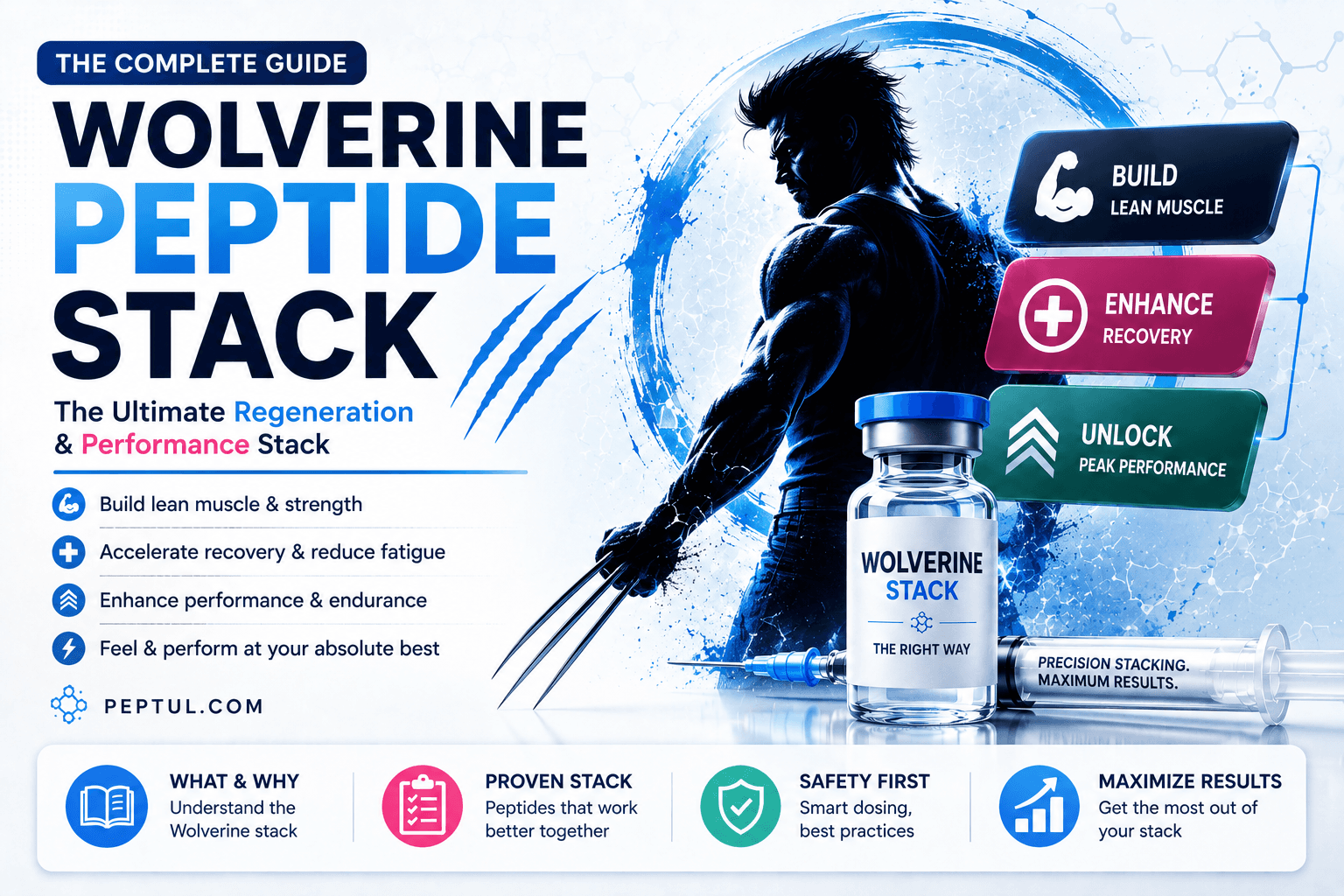
The Wolverine stack is two peptides run together: BPC-157 and TB-500. That's it. Two compounds, one recovery protocol.
The name comes from the X-Men character who heals from anything, because that's the whole point of the combo - accelerated recovery from injuries, soft-tissue damage, and the stuff that normally takes forever to come back from. It's probably the most-run recovery stack in the peptide world, and it's the one people reach for when a single peptide isn't cutting it.
Why these two peptides together?
This goes back to the rule that a good stack is complementary, not redundant. BPC-157 and TB-500 don't do the same job - they cover different ground, and that's exactly why they're paired.
BPC-157 is the localized healer. It's known for working on the specific area you're trying to fix - tendons, ligaments, gut lining, the actual site of the damage. People run it for injuries that are stubborn and in one spot.
TB-500 (a fragment related to Thymosin Beta-4) works more system-wide. It's associated with cell migration, flexibility, and broad recovery rather than one pinpoint location.
Put them together and you're hitting recovery from two directions: targeted repair at the injury plus system-wide support. That's the logic people are chasing. One hammer for the nail, one for the whole wall.
Wolverine stack dosing: what people actually run
Heads up before the numbers: these are commonly cited community and research figures, not a prescription. Everyone's different, and you should treat this as a research starting point, not gospel.
BPC-157 - most people run somewhere in the 250–500 mcg per day range, often as a single daily dose or split into two.
TB-500 - usually dosed by the week, not the day. A common pattern is a loading phase of around 2–2.5 mg twice a week for the first 4–6 weeks, then dropping to a lower maintenance dose after.
Cycle length - most Wolverine protocols run 4 to 8 weeks, long enough to actually see recovery progress without running it forever.
Both come as a powder you reconstitute with bacteriostatic water before injecting. The amount of bac water you add determines your dose-per-click, which is the part everyone fumbles - more on that at the end.
Where to inject the Wolverine stack
Both peptides are almost always run as subcutaneous (subQ) injections - a small needle into the fat layer, usually the stomach. It's the standard, it's shallow, and most people find it easy after the first couple.
One nuance people debate: BPC-157 is sometimes injected near the injury site (localized) on the theory that you get more action where you need it, versus systemic subQ anywhere on the body. TB-500 is generally run systemic - you're not targeting one spot with it.
If you're brand new to injecting, don't wing it off a forum comment. Read up on subQ technique properly first.
Where to buy the Wolverine stack (and what to watch for)
Here's the part nobody likes: BPC-157 and TB-500 are sold as research chemicals, and the vendor landscape is a minefield. Purity ranges from "lab-grade and third-party tested" to "mystery powder in a vial," and the price difference doesn't always tell you which is which.
Two rules before you hand anyone money:
Demand a recent third-party COA (Certificate of Analysis). A real vendor tests their batches and shows you the results. If they can't produce one, that's your answer.
Check what other buyers actually got, not the marketing. Vendor sites all sound great. Real feedback is the only thing that matters.
That's literally why our open vendor reviews exist - unfiltered, no affiliate spin, so you can see who's actually shipping tested product before you risk it. Check a vendor there first. It's free and it'll save you from the expensive lesson most people learn the hard way.
What results should you actually expect?
Real talk: the Wolverine stack is a recovery tool, not a miracle. People report faster healing on stubborn injuries, less nagging soreness, and improved mobility over a cycle. That lines up with what each peptide does.
What it won't do is regrow a torn tendon overnight or replace actual rehab, rest, and not reinjuring yourself. The people who get the best results pair the stack with smart recovery, not instead of it. And like most peptide feedback, a lot of it is anecdotal - track your own progress and judge from that.
The part that turns into a mess
So you've got two peptides, two different dosing schedules, two reconstitution ratios, and a loading phase that changes halfway through the cycle. Now go remember all that off a sticky note in three weeks.
This is exactly what our stack builder handles - drop in BPC-157 and TB-500, set your doses, and it does the reconstitution math and lays the whole protocol out in one place. No more guessing if it was 250 or 500 mcg, no more screenshotting forum comments.
And once it's dialed in, save it to My Stuff. Free, one click, and your exact Wolverine protocol is sitting there next time you want to run it or tweak it. Build it once instead of rebuilding it from memory every cycle.
Quick FAQ
Is the Wolverine stack safe? Both peptides are widely used and generally reported as well-tolerated, but they're research compounds without long-term human safety data on the combo. Start conservative, use tested product, and talk to a healthcare professional - especially if you're on other meds.
How long until I see results? Most people report changes over a few weeks, not days. The 4–8 week cycle exists for a reason - recovery takes time.
Can you mix BPC-157 and TB-500 in the same syringe? Sometimes people do to save on injections, but it depends on the peptides and your reconstitution, and the dosing math gets trickier. We break this down in its own guide.
Is the Wolverine stack legal? BPC-157 and TB-500 are typically sold for research purposes, not as approved drugs. Laws vary by country and they're banned in competitive sport (WADA). Know your local rules.
This is educational info for research purposes, not medical advice. Peptides affect everyone differently - do your own research, use third-party-tested product, and consult a professional before starting anything.
Tags
For educational and research purposes only. Not medical advice. Always consult a qualified healthcare provider before using any research compound.